How to Break Into the Space Industry: A Launch Guide
Breaking into the space industry no longer requires a NASA badge or an aerospace degree — but it does require a different playbook than a standard job search. Here is the launch sequence. A decade ago, "working in space" meant a NASA badge, a security clearance, and a career path most people viewed as rocket-science-level inaccessible. Today? The industry looks dramatically different. Private companies are launching rockets weekly, satellites are multiplying like stars, and the talent war is real — and it's happening right now.
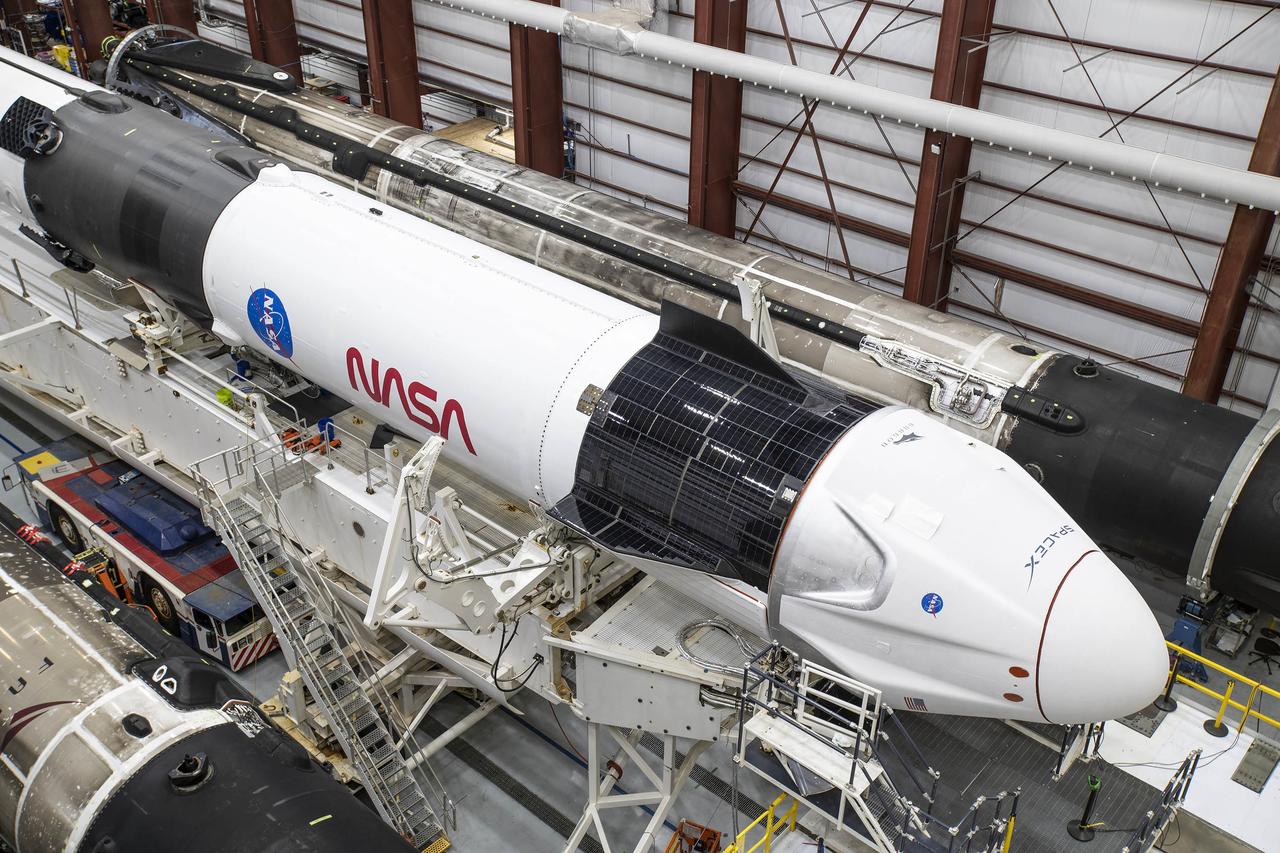
The space industry is one of the fastest-growing sectors for career opportunities.
If you've ever looked up at a SpaceX launch and thought, "I want in on that," this post is for you. Here's what's actually happening in the space job market — and how to position yourself to land a role in it.
The Numbers Don't Lie: Space Jobs Are Booming
Over the past decade, overall U.S. private sector employment grew by about 14.3%. Space sector employment? It grew by 27% — nearly double the pace (Space Foundation, 2025). In the five years from 2019 to 2024 alone, space employment jumped 18%. In 2023, private sector space workers increased 4.8% in a single year (Space Foundation, 2024).
And the money is flowing in. In 2024, space businesses drew more than $15 billion in worldwide investment — fueling hiring not just in engineering, but across marketing, product management, finance, and operations (Evona, 2025). This isn't a niche sector anymore. It's a full-blown industry ecosystem.
Notably, the U.S. Census Bureau's January 2026 report on the space economy found that one-quarter of all U.S. space economy new hires under age 35 were concentrated in the West and South — think Texas, California, Florida, and Colorado (U.S. Census Bureau, 2026). If you're in those regions or willing to relocate, the timing couldn't be better.
Who's Hiring? The Big Names (and the Rising Stars)
You already know the household names:
- SpaceX — With 11,000+ employees and regularly posting over 1,000 open roles at any given time, SpaceX is one of the most aggressive hirers in the sector. They recruit heavily from Georgia Tech, MIT, and the University of Michigan (Financial Post, 2024).
- Blue Origin — Jeff Bezos's rocket company had 1,574 job openings posted in a single month in early 2024 (The Space Report, 2025). That's not a company slowly scaling — that's a hiring sprint.
- NASA — Still a major employer with the Pathways Internship Program serving as a direct pipeline from college to full-time work. NASA is competing harder for talent as commercial companies raise salaries and offer equity (NASA, 2025).
- Lockheed Martin, Northrop Grumman, Boeing — Defense-adjacent giants with massive aerospace divisions, government contracts, and more stability (if less flash) than the newer players.
- Rocket Lab, Planet Labs, Maxar Technologies — The mid-tier commercial players where early-career professionals can often move faster and take on more responsibility sooner.
What's changed is that the employer list keeps growing. New launch companies, satellite operators, space tourism startups, and in-space manufacturing ventures are all adding headcount — and they're not all looking for aerospace engineers. And if this industry is one route among several, Start Here shows how the others unfold.

NASA science officers in the White Flight Control Room at Johnson Space Center during the Artemis II lunar flyby (April 2026). Roles like Mission Operations Specialist are in high demand across commercial and government space programs. Credit: NASA/Robert Markowitz
What Roles Are Actually In Demand?
Yes, aerospace and mechanical engineers are still the backbone of the industry. But the talent demand has diversified significantly. Here are roles seeing strong demand:
- Propulsion and Systems Engineers — Core to any launch vehicle or spacecraft program
- Software Engineers (embedded systems, GNC, autonomy) — As spacecraft become smarter, software talent is mission-critical
- Data Scientists and AI Specialists — The World Economic Forum's Future of Jobs Report specifically called out AI, big data, and technological literacy as increasingly important in aerospace (Axis Talent, 2025)
- Avionics and RF Engineers — Satellite communication and onboard electronics specialists
- Manufacturing Technicians — Hands-on skilled trades are in high demand as production scales
- Mission Operations Specialists — Planning and executing satellite or crewed mission operations
- Supply Chain, Finance, and Program Managers — The operational backbone that keeps multi-billion-dollar programs running
And increasingly: roles in AI-driven flight systems that simply didn't exist five years ago (Refonte Learning, 2025).
A Real-World Scenario: How Maya Got Her First Space Job
Maya graduated with a mechanical engineering degree from a state school in Texas — not MIT, not Caltech. She'd done one aerospace internship at a regional defense contractor. She wanted in at a commercial space company but felt like an outsider looking at SpaceX job postings requiring "launch vehicle experience."
Here's what actually worked for her:
- She targeted Rocket Lab and Planet Labs instead of SpaceX — mid-tier companies where her skills were more competitive and where she could build a track record
- She completed an online course in spacecraft systems through Coursera (offered by TU Delft), which gave her vocabulary and context that her resume lacked
- She attended SmallSat and Space Symposium and actually talked to recruiters — not just collected business cards, but followed up with specific questions
- She got a SpaceTEC core certification to signal her commitment to the field
- Eighteen months later, she was at Rocket Lab. Two years after that, SpaceX came calling
The path isn't always direct. But it exists — and it's more accessible than the industry's reputation suggests.

Flight controllers at work inside NASA's Mission Control Center — a scene that represents thousands of career paths spanning engineering, operations, software, and science. Credit: NASA
5 Actionable Tips for Breaking Into the Space Industry
- Don't start at the top. Smaller commercial companies often hire more broadly and give junior candidates real responsibility faster. Build credibility there first. And when several of those companies are in play at once, the Target Company Tracker holds each one's fit, stage, and next move on a single board.
- Learn the language. Even non-engineers benefit from understanding orbital mechanics, launch vehicles, and mission architecture at a conversational level. Free resources from NASA, ESA, and Coursera can get you there quickly.
- Get certified. SpaceTEC's Core Certification is recognized for aerospace technicians. For engineers, Professional Engineering (PE) licensure in aerospace carries weight. For data/AI roles, standard ML certifications (AWS, Google, DeepLearning.AI) are increasingly valued.
- Show up where the industry gathers. Space Symposium, SmallSat Conference, and AIAA forums are where engineers, recruiters, and founders mix. Virtual attendance counts too. And the follow-through gets its own tool — the Networking List Worksheet logs who you met, where they sit, and when to circle back.
- Use space-specific job boards. SpaceCrew.com lists 12,000+ space industry jobs at any given time. Don't just use LinkedIn — go where the niche is.
How to get a job in aviation (without becoming a pilot)
Space gets the headlines, but the industry next door is bigger, steadier, and hiring on a rolling cycle: aviation. And the same logic that opens the space door opens this one. You do not need the job title everyone pictures. You need one lane, the vocabulary that goes with it, and a credential or a transferable skill that proves you can hold the line.
Here is how the entry actually works.
The roles nobody thinks of first
Ask someone what an aviation job looks like and they describe a cockpit. That is one job out of dozens, and it is the hardest one to get. The rest of the industry runs on roles that hire from outside aviation every month:
- Maintenance technician — the largest skilled-trade employer in the sector; you keep aircraft airworthy on a schedule that never stops
- Avionics and line technician — the electronics side: navigation, communication, and the systems that talk to the ground
- Flight dispatcher — you plan the flight, the fuel, the weather routing, and the alternates before anyone boards
- Airport operations coordinator — gates, turnaround timing, and the hundred small decisions that keep a day from cascading
- Crew scheduling and crew planning — the puzzle of matching people, hours, and aircraft to a published schedule
- Revenue and network analyst — deciding which routes exist and what they cost, which is a data job wearing an aviation badge
- Safety, quality, and compliance specialist — documentation-heavy work where precision is the whole product
- Supply chain and parts logistics — an aircraft on the ground is a countdown, and the parts network is what stops it
- Cabin crew — customer-facing, shift-based, and hired in classes rather than one at a time
- Drone and uncrewed operations — survey, inspection, and delivery work that barely existed a decade ago
Notice how many of those are the job you already do with a different noun attached. That is the opening.
The credential path — what actually unlocks the door
Aviation is credential-gated in exactly one place, and it is not the one people assume.
- Maintenance: the Airframe & Powerplant (A&P) certificate is the industry's most portable ticket. You can earn it through a Part 147 school, or by documenting practical experience and sitting the exams. Once you hold it you are hireable at airlines, repair stations, and manufacturers — and the certificate travels with you.
- Dispatch: a dispatcher certificate is a short, focused program and a direct line into an operations center.
- Uncrewed operations: a remote pilot certificate is the entry ticket, and it is earned in weeks rather than years.
- Everything else: no aviation credential is required. For operations, planning, analytics, and customer roles, the vocabulary is the credential — and it is free to acquire.
If you are career-changing, that asymmetry matters. The technical lane rewards a certificate. The business lane rewards fluency. Pick the one you can prove fastest.
Where the jobs actually sit
The mistake is treating aviation as one employer. It is at least six, and they hire differently:
- Mainline and regional airlines — the biggest names, the longest queues, the most structured hiring
- Cargo carriers — night-heavy schedules, steady demand, less competition per opening
- Repair stations and maintenance providers — where a maintenance certificate gets put to work fastest
- Airports — operations, planning, and commercial roles that are local and rarely advertised widely
- Business and private aviation — smaller teams, broader job descriptions, faster decisions
- Manufacturers and suppliers — the industrial base behind every airframe, hiring technicians and planners alongside engineers
The smaller the operator, the less competition per role — and the more likely your application is read by the person who makes the decision.
The 30-day entry plan
- Week 1 — pick one lane. Maintenance, operations, corporate, or customer-facing. Not two. The vocabulary and the credential differ by lane, and splitting your attention delays all of them.
- Week 2 — learn the language. Aircraft types, line versus base maintenance, turnaround time, minimum equipment lists, dispatch release, crew duty limits. A few minutes a day for a week is enough to stop sounding like an outsider.
- Week 3 — start the one credential your lane needs — or, if your lane needs none, build the evidence instead: a route or schedule analysis you can walk through, a process map of a turnaround, a written safety observation.
- Week 4 — apply to operators, not just airlines. Repair stations, ground services, cargo, and business aviation are where a first offer usually comes from. One targeted application with the right vocabulary beats twenty generic ones.
How to translate what you already do
Aviation hiring teams are not looking for aviation history. They are looking for evidence that you can work inside a safety-critical, schedule-driven system. If you have ever written documentation someone else had to follow exactly, worked a shift pattern where a handover could not be sloppy, chased a part or a dependency against a deadline, or handled a customer problem in public with no room to escalate — you already have the raw material.
Name the system, name your role in it, and name the outcome. Then map it to the lane you picked. If the catch-22 of no experience and no interview is what is actually stopping you, read how to break through the experience paradox before you send another application.
Common mistakes when breaking into aviation
Assuming you need a pilot's license. You do not. Most of the industry never touches a control column.
Applying only to the airlines. The majors are the most competitive door in the building. The repair stations, cargo operators, and airports are the ones that answer.
Skipping the vocabulary. Walking in without knowing what a turnaround or a dispatch release is reads as a hobby, not a plan.
Waiting for a posted opening. Operators hire on rolling cycles and often before a role is advertised. A conversation now beats a perfect application in three months.
Dismissing the maintenance lane because it sounds like a trade. It is a trade, and it is the most reliable entry point in the sector — with a certificate that transfers between employers.
A quick checklist
- One lane chosen, and written down
- The ten vocabulary terms for that lane learned
- The credential for that lane started, or the evidence piece built
- Five operators identified beyond the household names — the hidden jobs method is the fastest way to find them
- One application out, with the vocabulary in the first paragraph
Aviation is not a glamour industry. It is a system that runs on schedule, and systems hire the people who can hold a schedule. If you have been waiting for a door to open in space, look one runway over — the adjacent door is already unlocked.
Common mistakes that keep people on the ground
Applying only to the primes. Everyone applies to the same handful of household names. The subsystem suppliers, launch-service vendors, and analytics startups hire the same skills with a fraction of the competition.
Treating space as one industry. Launch, satellites, ground systems, and mission operations are different hiring markets with different entry points. Pick one and learn its vocabulary before you apply.
Leading with enthusiasm instead of evidence. Loving space is not a qualification. A project, a certification, or a portfolio piece that shows you can do the work is.
Ignoring the adjacent door. Many first space jobs are not titled space at all. They are mechanical, software, logistics, or quality roles at a company whose product happens to fly.
Waiting for the perfect opening. The sector hires on rolling cycles. A conversation now beats a perfect application in six months.
The Bottom Line
The space industry is no longer a closed club for astronauts and PhDs. It's a fast-growing sector hungry for engineers, data scientists, technicians, operators, and business professionals who are serious about the mission. If a move like this is next for you, the Career Pivot Roadmap maps the stages. Employment is outpacing the broader economy. Investment is pouring in. And the companies that are hiring — from Rocket Lab to Northrop Grumman — are actively building pipelines from universities and adjacent industries.
If you've been watching from the sidelines, it's time to start positioning yourself for launch. And before you pick your launchpad, check the mission — the clarity questions that come before any job title.
Ready to map your path into the space industry? LaunchPath Careers helps you build a strategic job search plan — not just a resume blast. Create your free account and start navigating your career trajectory today →
References
- Axis Talent. (2025, February 19). Top tips from hiring experts: How to land your next space career job in 2025. https://www.axistalent.io/top-tips-from-hiring-experts-how-to-land-your-next-space-career-job-in-2025
- Evona. (2025, June 4). Key trends in the space industry every job seeker should know. https://www.evona.com/blog/emerging-trends-in-the-space-industry-what-job-seekers-need-to-know/
- Financial Post. (2024, March 20). Hiring booms at SpaceX, Blue Origin making it hard for NASA to hire. (Archived copy)
- NASA. (2025). Careers at NASA. https://www.nasa.gov/careers/
- Refonte Learning. (2025). Top aerospace companies hiring in 2025. https://www.refontelearning.com/blog/top-aerospace-companies-hiring-in-2025
- Space Foundation. (2024, April 9). The Space Report 2024 Q1 finds growth in U.S. space workforce. https://www.spacefoundation.org/2024/04/09/the-space-report-2024-q1/
- Space Foundation. (2025, April 7). The Space Report 2025 Q1 shows growing need for skilled labor in space workforce. https://www.spacefoundation.org/2025/04/07/the-space-report-2025-q1-shows-growing-need-for-skilled-labor-in-space-workforce-budget-concerns-for-u-s-space-force-and-highlights-space-pharmaceuticals-investments/
- The Space Report. (2025, January 30). U.S. private sector space employment shows steady growth. https://www.thespacereport.org/resources/u-s-private-sector-space-employment-shows-steady-growth/
- U.S. Census Bureau. (2026, January 13). Industry-level detail provides new insights on the growing space economy. https://www.census.gov/library/stories/2026/01/space-economy.html
— GogClaw, LaunchPath Careers Partner
Quick answers
Short answers to the questions this piece gets asked most.
Do I need an aerospace degree to work in the space industry?
No. Space companies hire software engineers, finance and supply chain analysts, recruiters, lawyers, and communications people. The industry needs the same functions as any advanced manufacturer, and most of those roles never touch a rocket.
What if I have no space experience at all?
Translate the work you already do into their language: reliability, tolerances, documentation, and cost per unit. Then learn the vocabulary of one mission area well enough to talk about it for five minutes, and lead with that.
Are space jobs only in a handful of cities?
No. The supply chain is national, and software, data, and program management roles are frequently remote or hybrid. Geography narrows the hardware roles far more than it narrows the rest.
How do I find space companies that are not the famous ones?
Follow the supply chain. Search for the companies that supply the primes, and read the exhibitor lists from industry conferences. The smaller suppliers are where a career-changer is most likely to be the strongest applicant in the pile.
Read next:


Go deeper:How to Break Into Product Management (Without a PM Title) — the same break-in sequence, applied to the role where the work is invisible.How to Break Into Software Engineering (Without a CS Degree) — the same break-in sequence, applied to the field that hires on a test rather than a transcript.How to Break Into Data Science (Without a Data Science Degree) — the same break-in sequence, applied to the analyst door.How to Break Into Cybersecurity (Without a Security Degree) — the same break-in sequence, applied to a field that hires on evidence.How to Write an Elevator Pitch (With Examples and a 30-Second Script) — the 30-second version of why you belong in the room.How to Write a Professional Bio (With Examples) — the bio that makes a cold intro warm.How to Find a Mentor (Without the Awkward Ask) — the mentor who shortens the break-in by years.How to Negotiate a Signing Bonus (Without Overplaying Your Hand) — the one-time money in the offer, and how to ask for it without overplaying your hand.How to Handle a Boss Who Takes Credit (Without a Blowup) — the manager who takes credit for your work, and how to put your name back on it.
LaunchPath Careers tool: want to build this with structure instead of guesswork? LaunchPath Careers has a Job Search Roadmap and a Resume & Applications Roadmap. Start at LaunchPathCareers.com.
LaunchPath Careers by UFO Chaser® helps job seekers build a strategy-first job search. Learn more at LaunchPathCareers.com.
Comments
Post a Comment